Anthropic officially released Claude Opus 4.7 on April 16, 2026, positioning it as a direct upgrade over Opus 4.6 and calling it its most capable generally available model to date. Most of the early attention is going to coding, agents, and enterprise workflows. That makes sense. But marketers should not ignore this release.
Because if you strip away the engineering headlines, Opus 4.7 is also a product update about better instruction-following, stronger long-context work, improved high-resolution vision, more polished professional output, and more reliable multi-step execution. That is not just developer news. That is marketing workflow news too.

What exactly launched?
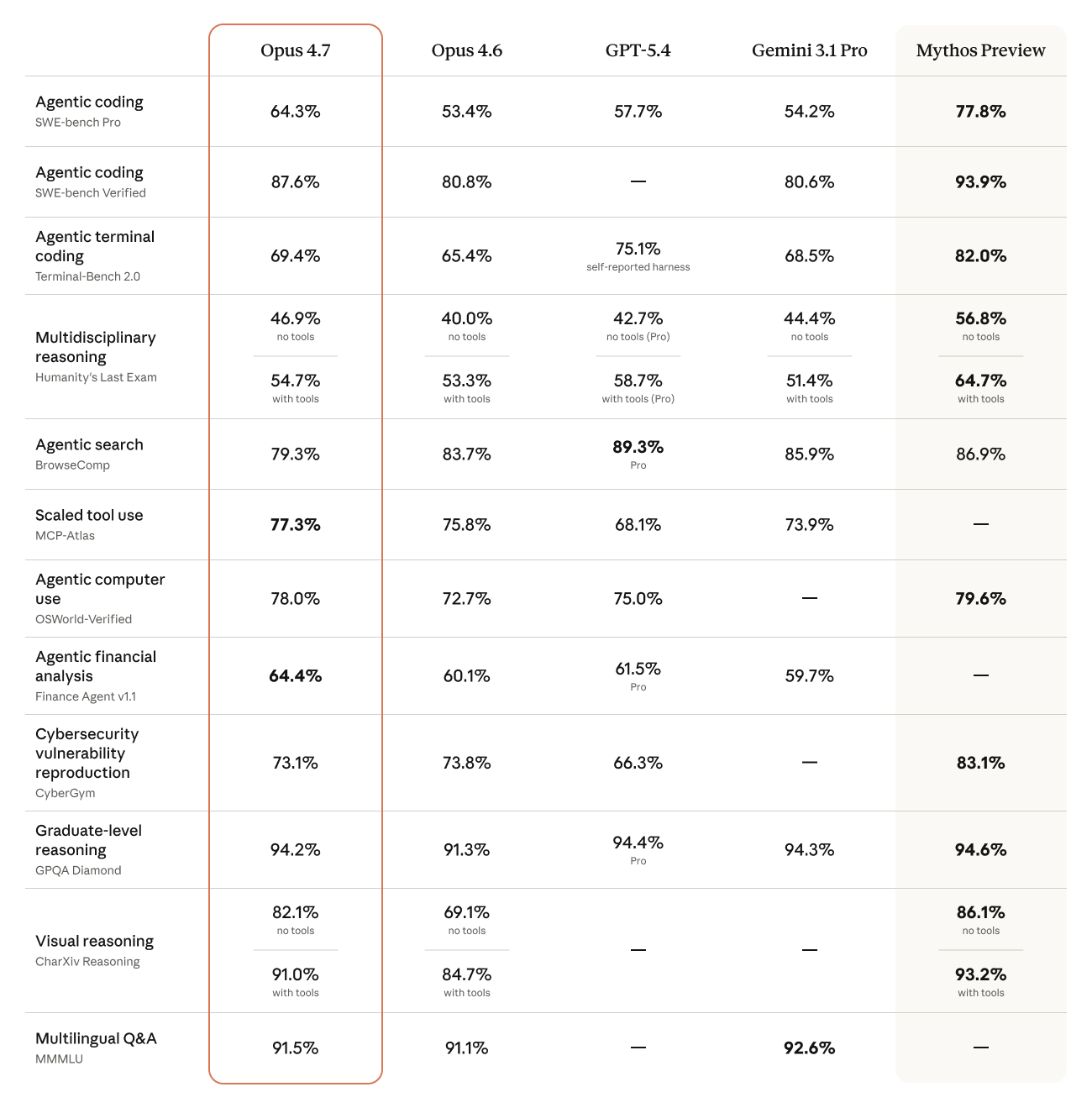
According to Anthropic’s official announcement, Claude Opus 4.7 is now generally available across Claude products, the API, Amazon Bedrock, Google Cloud Vertex AI, and Microsoft Foundry. Anthropic says the model improves meaningfully on Opus 4.6, especially on advanced software engineering and difficult long-running tasks.
But the release notes also include details that matter outside engineering teams. Anthropic says Opus 4.7 has substantially better vision, can process higher-resolution images, follows instructions more literally, produces better slides and documents, and performs better on complex document analysis and finance-oriented reasoning tasks. It also introduces a new xhigh effort level for finer control over reasoning depth and latency.
Why this release matters to marketers
The wrong way to read this launch is to think, “This is mostly for coders, so it probably does not change much for marketing.” The better way to read it is this: Anthropic just shipped a model that is more reliable at complex work, better at visual interpretation, stronger at document reasoning, and more polished in professional outputs. Those are exactly the pressure points where many marketing teams still get mixed results from AI.
Marketers are not only generating captions anymore. They are asking AI to digest customer research, pull patterns from messy notes, compare positioning, review screenshots, rewrite messaging across channels, assemble presentations, and support campaign analysis. That kind of work falls apart when a model loses context, misreads visual input, or follows instructions loosely. Opus 4.7 looks designed to reduce that friction.
The most relevant changes for marketing teams
1. Better instruction-following
Anthropic says Opus 4.7 is substantially better at following instructions and even notes that prompts written for older models may need to be re-tuned because this model takes directions more literally. For marketers, that matters a lot. Brand, tone, formatting, audience constraints, compliance notes, and campaign rules all depend on precise adherence to instructions. A model that follows the brief more faithfully is immediately more useful in production work.
2. Better high-resolution vision
One of the more overlooked parts of the launch is the improvement in vision. Anthropic says Opus 4.7 can accept images up to 2,576 pixels on the long edge, which is more than three times as much visual detail as prior Claude models. For marketers, that opens up better work on landing page critiques, creative audits, ad screenshots, competitor teardowns, analytics dashboard interpretation, and document review where fine visual detail actually matters.
3. Stronger document and knowledge-work performance
Anthropic highlights stronger performance in finance, document reasoning, and broader knowledge work. It also cites early testing showing better results on enterprise document analysis and professional task quality. That has a direct translation for marketers: briefs, messaging docs, launch plans, sales enablement materials, board decks, market research summaries, and performance narratives all become better candidates for AI-assisted drafting and refinement.
4. More polished professional output
One line in the announcement stands out more than it might seem at first glance: Anthropic says Opus 4.7 is “more tasteful and creative when completing professional tasks,” producing higher-quality interfaces, slides, and docs. That is a meaningful statement for marketing teams, because a lot of AI output fails not because it is unusable, but because it feels generic, clumsy, or visually and rhetorically off. If Opus 4.7 improves taste as well as reasoning, that is a practical improvement for campaign materials and internal assets alike.
5. Better long-running, multi-step work
Marketing work often looks simple from the outside and messy from the inside. Research leads to messaging, messaging leads to variants, variants lead to assets, assets lead to performance reviews, and then everything has to be packaged for stakeholders. Opus 4.7 appears stronger at exactly that kind of multi-step flow. Anthropic and early testers repeatedly frame it as more consistent, more rigorous, and better at carrying work through without falling apart midway.
What marketers should actually do with it
If you are evaluating Opus 4.7 from a marketing perspective, the most useful question is not “Can it write content?” Every frontier model can write content. The better question is: “Which marketing jobs become meaningfully more reliable because of this release?”
Here are the strongest candidates:
- Message strategy work: turning voice-of-customer inputs, positioning docs, and sales notes into clearer messaging frameworks.
- Creative and landing-page review: analyzing screenshots, ad creatives, webpages, and presentation visuals with more visual accuracy.
- Long-form campaign planning: building launch briefs, content architectures, narrative arcs, and cross-channel rollout plans without dropping context.
- Reporting and synthesis: combining notes, dashboards, performance summaries, and research documents into cleaner decision-ready outputs.
- Executive-ready materials: drafting more polished presentations, summaries, and internal documents that need to sound sharper than generic AI copy.
What probably does not change much
Not every marketing use case suddenly becomes premium-model territory. If your team mostly needs bulk captions, low-risk rewrites, metadata, or repetitive formatting, Opus 4.7 may be more model than you need. The release looks more relevant for teams doing high-context strategic work than for teams chasing cheap content volume.
Anthropic says pricing remains the same as Opus 4.6: $5 per million input tokens and $25 per million output tokens. So the practical play for marketers is not to use Opus 4.7 for everything. It is to use it where ambiguity, quality, context depth, or multimodal analysis actually justify the upgrade.
The real marketing takeaway
Claude Opus 4.7 is not important because it is “an AI model for marketers.” That is the wrong frame. It is important because Anthropic’s newest release seems to improve several things marketers care about at the same time: better briefs, better visual understanding, better professional output, and better follow-through on complex work.
Bottom line
Claude Opus 4.7 may be launching with software engineering at the center of the conversation, but the release has obvious implications for marketing teams too. Better instruction-following, stronger visual understanding, improved document reasoning, and more polished professional output all map directly to the kind of work marketers do every day.
The biggest opportunity is not simply generating more content. It is getting better support on higher-value work: sharper strategy documents, more reliable research synthesis, stronger creative review, cleaner presentations, and better follow-through on complex multi-step tasks. For teams already using AI in serious workflow decisions, Opus 4.7 looks like a meaningful upgrade worth paying attention to.